The key to growth is to structure the work and organise around capabilities. Everyone will know what is happening, what is expected and what their role is, and management will know who is doing what, why and how it is going.
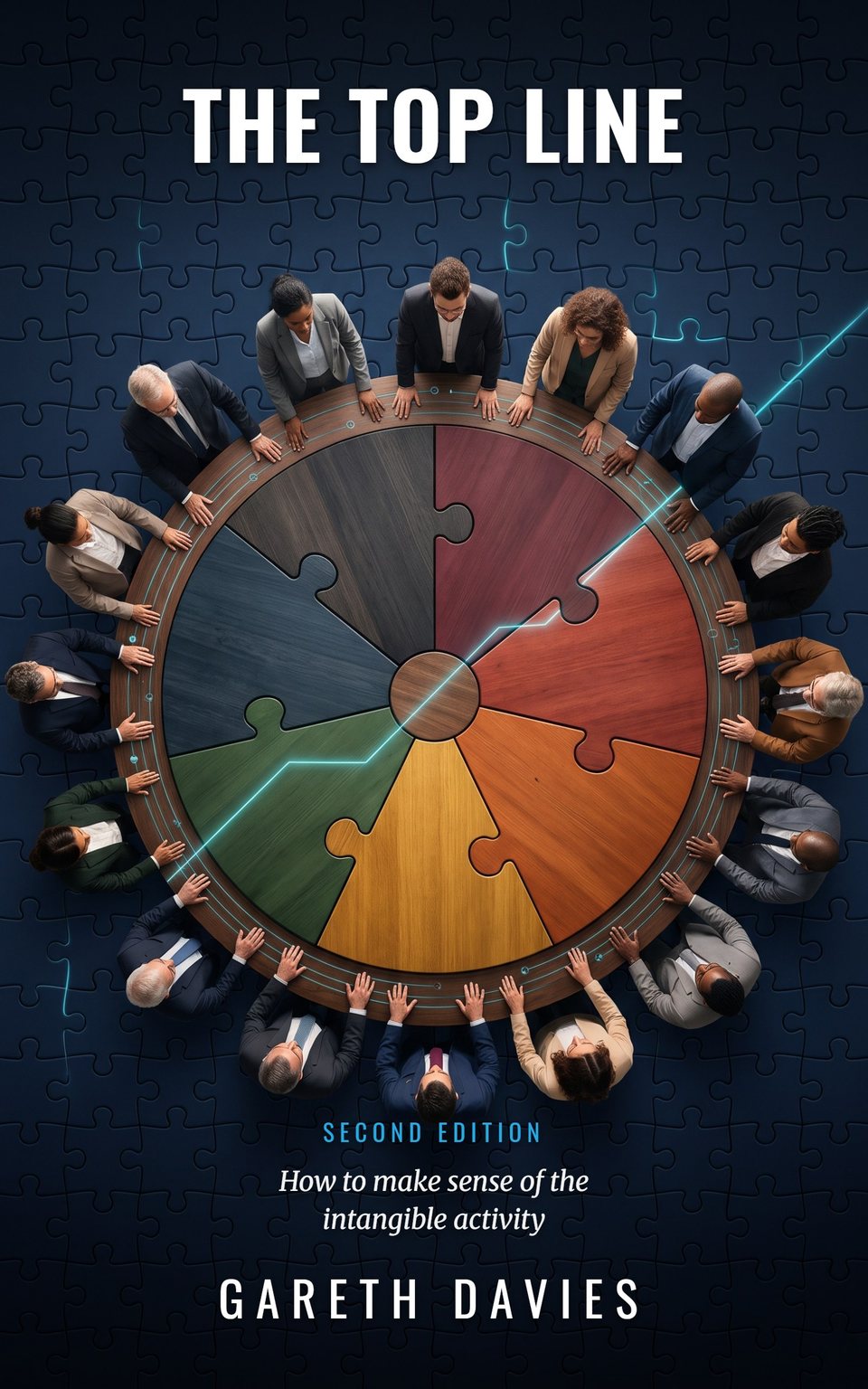
Most of what decides a sale happens before anyone talks about price: the conversations, relationships and judgements that are hard to see and harder to measure. The Top Line places structure on that intangible activity, so it can be designed, managed and improved like any other part of the business.
Many companies concentrate on inside sales, where the link between effort and outcome is clearest, and leave the rest to chance. But every one of the seven capabilities affects the top-line eventually, whether it is managed or left to happenstance. The book is not a step-by-step guide; it is a blueprint for making sense of the work that drives revenue, so a company can decide what to build first.
It also sets out the distinction the whole series rests on: competence is what an individual can contribute; capability is what the organisation can do by working together, combining systems, processes, management and people.
The first edition was published in 2024 as Making Sense of the Top-Line, and is no longer on sale. The second edition is coming soon.
Richard Dyson, CEO of io consulting, called it an “easily digestible” book that “distilled everything anyone should know about designing B2B sales activities and, indeed, helped me to make sense of what was needed to drive top line growth”.
The seven capabilities
Customer Experience: the basis for your reputation
Inside Sales: captures revenue from the opportunities that arise
Account Management: makes sure you receive the opportunities you deserve
Outside Sales: creates the opportunity to quote for work you want
Commercial Innovation: keeps you relevant to your market
Channels and Partners: help you address larger markets with more resources
Competition Watch: detects market change and is your early warning